


Major Litigation Update: Federal Courts Strike Down the $100,000 H-1B Fee and the USCIS Benefits Freeze
By Nikki Whetstone, Managing Attorney
Over the last year and a half, the employment-based immigration community has faced an unprecedented wave of restrictive policies that drastically reshaped the immigration landscape. From the implementation of a $100,000 fee for certain new H-1B petitions to a sweeping internal policy that froze USCIS benefit processing for nationals of 39 countries, U.S. employers and foreign nationals have had to navigate severe operational gridlock and deep uncertainty.
In two monumental rulings issued within days of each other, federal courts struck down both mandates, declaring them unlawful and requiring USCIS to return to standard processing frameworks nationwide.
Below is a breakdown of what happened in court and what these decisions mean for you.
1. The $100,000 H-1B Fee Rule Vacated in Entirety, then Temporarily Reinstated
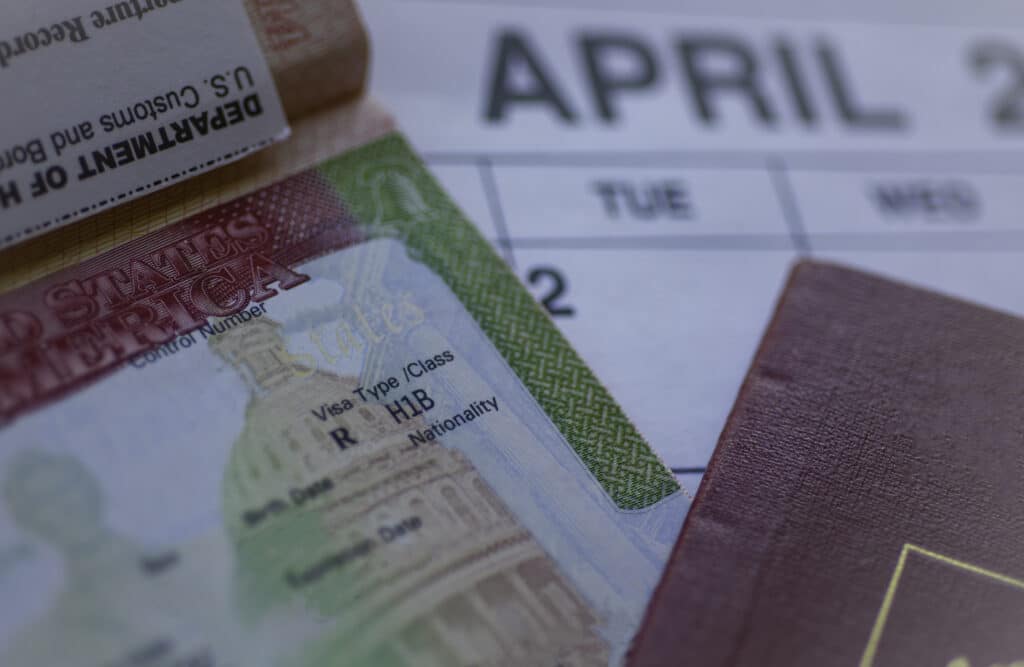
On June 8, 2026, the U.S. District Court for the District of Massachusetts issued a significant decision in California v. Mullin vacating the $100,000 H-1B fee rule in its entirety. The fee, which grew out of a September 2025 Presidential Proclamation, generally mandated that U.S. employers pay an unprecedented $100,000 before filing new H-1B petitions for beneficiaries processing their H-1B visas abroad.
The Court’s Findings:
- Unauthorized Taxing Power: The Court concluded that the administration’s financial requirement effectively functioned as a tax rather than a regulatory fee.
- Separation of Powers: The Court emphasized that under the U.S. Constitution, Congress holds the exclusive authority to impose taxes or fees of this magnitude.
- Administrative Procedure Act: The Executive Branch exceeded its statutory authority and violated the Administrative Procedure Act (APA) by establishing a massive monetary barrier without congressional approval and without complying with certain APA procedural requirements.
Immediate Impact:
The policy implementing the Proclamation was declared unlawful on June 8, 2026. However, because the Court issued a temporary stay of its own decision on June 12, 2026, the fee has been temporarily reinstated pending a decision by the U.S. Court of Appeals for the First Circuit on the Government’s broader stay request, which must be filed by June 18, 2026.
What this means for employers: U.S. employers preparing H-1B petitions for consular notification face renewed hurdles. Until the court of appeals rules on the stay or on the underlying legal merits, certain filings remain subject to the administration’s fee.
2. Nationwide Benefits Hold and “High-Risk Country” Freeze Struck Down
Just days earlier, on June 5, 2026, Chief Judge John J. McConnell, Jr. of the U.S. District Court for the District of Rhode Island delivered a sweeping, 135-page decision in Dorcas Int’l Inst. of Rhode Island v. USCIS.
The lawsuit, brought by a coalition of immigrant service organizations and labor unions, challenged four aggressive, internal USCIS policy memos that largely paralyzed domestic case processing since late last year. These internal policies had placed an indefinite hold on all immigration benefit requests, including nonimmigrant visa petitions, adjustment of status applications, work permit (EAD) applications, and naturalization applications, filed by individuals born in or holding citizenship from 39 designated “high-risk” countries, while simultaneously halting USCIS decisions on affirmative asylum applications worldwide.
The Court’s Findings:
- Pretextual National Security Justifications: The court found that the agency’s sweeping holds lacked a legitimate administrative record and failed to provide a reasoned explanation.
- Exceeding Statutory Limits: Judge McConnell ruled that while the Executive Branch has broad statutory authority under INA § 212(f) to regulate the entry of noncitizens into the United States, that power does not extend to domestic processing of immigration benefit requests. USCIS cannot weaponize an entry-focused statute to halt the processing of benefits for people who are already lawfully inside the United States.
- Condemning Nationality-Based Limbo: In a pointed rebuke of the agency’s “Country-Specific Factors Policy,” which forced USCIS officers to treat an applicant’s nationality in any of the 39 designated “high risk” countries as a significant negative factor in decisions on discretionary benefit requests, the court noted that applicants were improperly trapped in an indefinite legal limbo through no fault of their own, but “solely by the happenstance of their birth.”
Immediate Impact:
The Dorcas decision ordered a nationwide vacatur, meaning all four challenged internal processing holds are wiped off the books.
The Global Asylum Hold Policy is vacated, and affirmative asylum cases can now proceed.
The Benefits Hold Policy affecting nationals of 39 countries is vacated, and immigration cases for nationals born in those 39 countries can now proceed.
The Comprehensive Re-Review Policy which required USCIS to reopen and re-review previously finalized, approved benefits for individuals from the aforementioned 39 countries who entered the United States on or after January 20, 2021, is vacated. As such, these previously approved cases will not be retroactively scrutinized and reopened.
The Country-Specific Factors Policy is vacated, meaning USCIS officers must return to evaluating applications strictly on their legal merits rather than using an applicant’s country of birth as an automatic negative factor.
What this means for applicants: USCIS is legally obligated to immediately proceed with processing the case types named above. If an employee’s green card, work permit, or citizenship application was frozen under the 39-country policy, standard processing must resume. Furthermore, officers are strictly prohibited from treating an applicant’s country of origin as an automatic negative factor; cases must be evaluated on their individual merits.
Important Caveats & Legal Outlook
While these decisions mark a profound turning point, employers and applicants must keep a few crucial considerations in mind:
Domestic Processing vs. Consular Restrictions: The Dorcas ruling does not overturn travel bans/restrictions currently in place, nor does it directly alter the Department of State’s immigrant visa pause at U.S. embassies and consulates abroad affecting nationals from 75 countries.
The Threat of Appellate Stays: The government has already signaled its intent to fight back, beginning with filing a notice of appeal in the H-1B fee case on June 12, 2026. The District Court already temporarily paused its own order in California v. Mullin while the federal appellate court hears the government’s request for a “stay.” If the federal appellate court grants the government’s stay of the district court orders, the overturned policies would be reinstated while the appeals wind through the courts.
What You Should Do Now
Audit Pending Cases: Identify any workforce members whose work authorization or adjustment of status applications have been frozen or delayed due to the 39-country processing hold. Work with counsel to advocate for resumed movement of these cases. Consider upgrading eligible pending cases to premium processing.
H-1B Strategies: For U.S. employers with deferred international hires due to the crippling $100,000 fee, hold-strategies must remain in place for the immediate future while we await the appellate court’s determination on the stay. Preparing petitions now ensures you are ready to file the moment the legal landscape shifts.
Maintain Standard Compliance Timelines: Do not delay filing your extension or renewal requests. While cases are moving again, the sudden lifting of these freezes will inevitably cause temporary processing surges across USCIS’s local field offices and service centers.
Our team is actively monitoring these issues. If you have questions about how these rapidly evolving legal developments change your current immigration strategy or affect your pending case, please reach out to our office.
www.grossmanyoung.com | info@grossmanyoung.com | (240) 403-0913 | (301) 917-6900
*Disclaimer: This information is presented for the purposes of general education and does not constitute legal advice.
