


Latest ICE I-9 Fact Sheet Expands Substantive Violations, Including Electronic I-9 Deficiencies
By Mary E. Pivec, Of Counsel
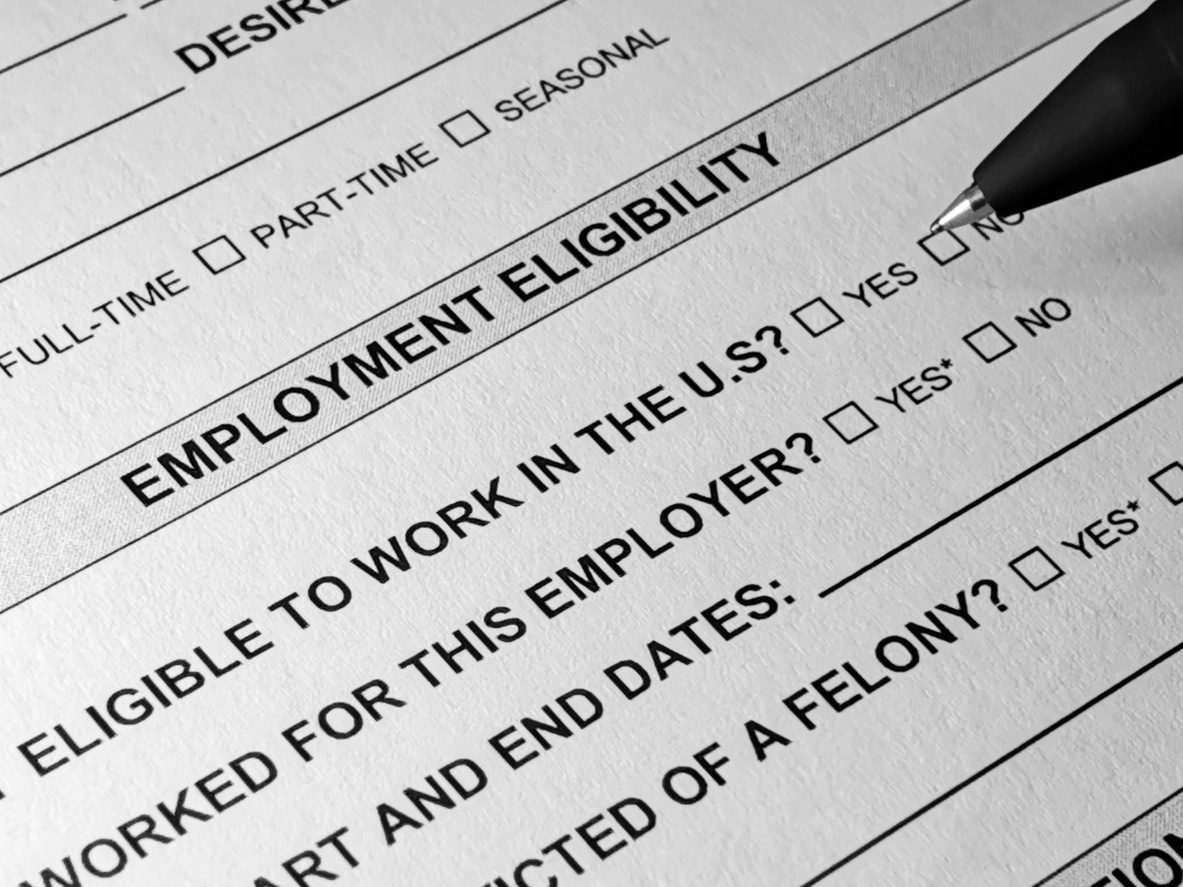
On March 16, 2026, ICE released an I-9 Inspection Fact Sheet that identifies seventeen new substantive I-9 paperwork violations — the majority of which had been classified as technical or procedural for almost 30 years. The Fact Sheet offers no explanation for the sudden shift, nor does it indicate an intent to seek public input regarding the appropriateness, lawfulness, or impact of these reclassifications. Changing the legal status of these seventeen new substantive violations permits U.S. Immigration and Customs Enforcement (ICE) to forgo providing employers with written notice and a 10-day period to correct them – conditions precedent to fining employers for making them under INA § 274A(b)(6), 8 U.S.C. § 1324a(b)(6). The current I-9 fine schedule authorizes civil money penalties ranging from $288 to $2,861 for any I-9 containing any one or more substantive violations based on the overall audit error rate. Predictably, these reclassifications enlarge both the risk of being fined for I-9 errors and the size of the fines assessed.
In addition to notable updates regarding reclassification, ICE’s March 16, 2026, Fact Sheet outlines an intention to enforce completion, retention, security, reproduction, and signature provisions of the Department of Homeland Security (DHS) electronic I-9 regulations (8 C.F.R. § 274a.2(e)-(i)) during audits of employer electronic I-9 files. Although these regulations were established two decades ago, only two enforcement cases have been made public.
The first involved Abercrombie & Fitch, which digitized its I-9 records without implementing an adequate index and retrieval system for ICE inspection. The case was settled in 2010, resulting in a penalty of $1.047 million. The second case, which remains ongoing, stems from I-9 audits performed at twenty Walmart locations during the first Trump Administration, with reported proposed fines totaling approximately $24 million. After unsuccessful settlement negotiations, ICE initiated enforcement proceedings through the Department of Justice’s Office of the Chief Administrative Hearing Officer (OCAHO) in 2022.
Walmart has contested liability on two fronts. In the U.S. District Court for the Southern District of Georgia, Walmart argued that good cause removal provisions of the APA, 5 U.S.C. § 7521, which protect OCAHO administrative law judges (ALJs) from the Present’s at-will removal authority, are unconstitutional. Though Walmart initially prevailed in the district court, the U.S. Court of Appeals for the Eleventh Circuit subsequently reversed the district court’s decision, holding that the limited duties of OCAHO ALJs do not unduly restrict the President’s authority to take care that the laws are faithfully executed. Walmart had filed its dismissal motions with OCAHO prior to the Eleventh Circuit’s ruling, wherein it had also asserted that the good cause provision of the APA was unconstitutional. Walmart further argued, in the alternative, that the Government’s amended pleadings were insufficient to state a claim. In an order dated February 23, 2026, OCAHO Chief Judge King addressed only the motion relating to Walmart’s Bethlehem, Pennsylvania location. Therein, the court declined to rule on the constitutionality of APA § 7521[1] on prudential grounds and otherwise denied Walmart’s motion challenging the adequacy of the government’s allegations related to violations of the DHS electronic I-9 regulations.
This article explores employer compliance and defense issues related to ICE’s recent reclassification of I-9 technical violations and proposed enforcement of the DHS electronic I-9 regulations.
Part I: Advising and Defending Employers Charged with Newly Classified Substantive Paperwork Violations
The following are the former technical or procedural violations recently reclassified as substantive in ICE’s March 16, 2026, Fact Sheet:
- Use of the Spanish language version I-9 form within the territorial United States.
- Failure to ensure that the employee prints his/her name and birth date in Section 1.
- Failure to ensure that the employee completes the Alien Registration Number/U.S. Citizenship and Immigration Services (USCIS) Number field next to the phrase “A lawful permanent resident (Alien #) in Section 1, even if recorded elsewhere in the form or in the attached employee verification documents.
- Failure to ensure that the employee completes the Alien Registration Number/USCIS Number field or the Form I-94 Admission Number field or, if applicable, the foreign passport number and country of issuance and the employment authorization expiration date field required for aliens authorized to work in the United States until a specified date (Alien # or Admission #) in Section 1, even if recorded elsewhere in the form or in the attached employee verification documents 1.
- Failure to ensure that the employee dates his/her signature in Section 1.
- Failure to ensure that the preparer and/or translator’s complete name, address, signature, and date are provided on Form I-9 (either Section 1 or Supplement A) at the time of completion, when either a preparer and/or translator was used to assist the employee in the completion of the form.
- Failure to mark the alternative procedure box in Section 2 if the employer used an alternative procedure authorized by DHS to examine documents.
- Failure to record the document title, issuing authority, document number(s), and expiration date(s) if any of an acceptable List A document or original and acceptable List B and List C documents described in 8 C.F.R. § 274a.2(b)(1)(v)(A)-(C) in Section 2, even if legible copies of the front and back of said documents are attached to the I-9.
- Failure to record the document title, issuing authority, document number(s), and/or expiration date of the replacement document required to have been presented in accordance with 8 C.F.R. § 274a.2(b)(1)(vi)(A) in Section 2, even if legible copies of the front and back of the documents are attached to the I-9.
- Failure to record the employee’s date of hire in the attestation portion of Section 2.
- Print the complete name and title of the employer or authorized representative in Section 2.
- Failure to date the employer or authorized representative certification date in Section 2.
- Failure to record the employee rehire date in Section 3 or Supplement B (Reverification or Rehire).
- Failure to record the document title, issuing authority, document number(s), and/or expiration date of the replacement document required to have been presented in accordance with 8 C.F.R. § 274a.2(b)(1)(vi)(A) in Section 3 or Supplement B regardless of retention of documents containing this information.
- Print the complete name of the employer or authorized representative, sign, and date the “Reverification and Rehires” portion of Supplement B, or an alternate applicable section or supplement pertaining to a required reverification or rehire entry.
- Failure to record the employee rehire date in Section 3 or Supplement B.
- Failure to mark in the alternative procedure box in Supplement B if the employer used an alternative procedure authorized by DHS to examine documents.
The History of the Agency’s Interpretation of I-9 Technical Violations
In the ten years following the enactment of the Immigration Reform and Control Act of 1986 (IRCA), the former Immigration and Naturalization Service (INS) considered any incomplete I-9 field a finable paperwork violation. Congressman Sonny Bono, who had been fined for such violations, sponsored legislation requiring INS to recognize certain technical or procedural violations as non-finable unless the employer failed to correct them after written notice and a ten-business-day period. This Bono “Good Faith Compliance” amendment to IRCA, found at Section 411 of the Illegal Immigration Reform and Immigrant Responsibility Act of 1996 (IIRAIRA), was enacted on September 30, 1996.
On March 7, 1997, INS Acting Commissioner for Programs, Paul Virtue, issued interim guidance (the Virtue Memorandum) that identified the technical or procedural I-9 form errors entitled to good faith compliance treatment — eleven of which ICE will now classify as substantive. At the time, there was no Spanish language I-9 form and the Preparer/Translator field was not present, so the Virtue Memorandum did not address these issues.
On April 7, 1998, INS published a proposed rule to implement the Bono amendment, acknowledging that employers who made a good faith attempt to comply could correct technical or procedural failures before they were considered violations. Under the proposal, eligibility to invoke the good faith compliance rule would be subject to two conditions: inspections must have occurred on or after September 30, 1996, and the rule would not apply to employers engaging in a pattern or practice of knowingly employing undocumented workers.
The 1998 proposed rule would have adopted the Virtue Memorandum’s classification scheme, finding that these paperwork errors “fall outside the principal components” of the IRCA employee verification scheme: (1) employee attestation of status and work eligibility in Section 1, (2) employer document verification attestation in Section 2, and (3) retention of the I-9 form for the required period. If an employer’s I-9 forms satisfied these principal components, they were considered to have demonstrated good faith compliance and could cure ancillary errors in accordance with the Bono amendment.
Although the 1998 proposed rule was never finalized, INS and its successor, DHS/ICE, continued to rely on the Virtue Memorandum in audit and enforcement proceedings, including OCAHO prosecutions and appeals before United States Courts of Appeal.
In November 2008, ICE published internal guidance for I-9 inspections and penalty assessments, maintaining the Virtue classification scheme except for the failure to date signature fields. In July 2009, after objections from the American Immigration Lawyers Association, ICE instructed enforcement personnel to treat missing signature dates as technical or procedural violations. The 2008 ICE guidance added use of the Spanish language I-9 and failure to complete the Preparer/Translator section as technical violations, reflecting changes to the form.
This guidance remained unchanged until the publication of March 26, 2026, Fact Sheet. ICE’s longstanding history of treating these violations as technical and curable supports an argument that reclassifying them as substantive without complying with the public notice and comment provisions and other dictates under the Administrative Procedure Act (APA) is improper. See, e.g.,5 U.S.C. § 553. In instituting its new policy, ICE would need to reasonably justify its change in enforcement policy, indicate the effective date, and properly account for reliance interests (including by estimating the fiscal impact). Without compliance with proper APA rulemaking procedures, the availability of OCAHO administrative review would likely bar direct federal court challenges. Historically, OCAHO administrative law judges have at times viewed ICE penalty assessments as excessive and have not been bound by agency fine calculation policy. Absent APA compliance, OCAHO judges may be free to reject ICE’s reclassification scheme and substitute their own judgment in interpreting the employment verification provisions of IRCA, particularly where the agency has abandoned its longstanding interpretation of what constitutes technical violations without explanation.
I-9 Corrective Action Guidance For Prior Technical or Procedural Violations
Many employers have adopted I-9 compliance policies and procedures that include routine auditing of their I-9 forms to ensure that the forms are properly completed, particularly if they continue to use and maintain paper I-9s. Those who do not should seriously consider undertaking or commissioning an audit of all active employee I-9s forms and forms relating to terminated employees subject to retention. The audit should include identification and correction of all previously classified technical violations now that ICE no longer recognizes an obligation to provide employers with written notice and an opportunity to correct such violations in the event of an audit.
If a client employer receives notice of an audit and counsel is retained to assist in the preparation and production of the I-9 files covered by the audit notice, it remains advisable to noticeably correct as many violations as possible prior to production unless ICE specifically instructs the client to refrain from making any corrections after service of the Notice of Inspection.
While contesting fines for previously classified technical violations may be possible, it may be advisable for employers to proactively correct such errors before receiving an ICE Notice of Inspection. Recommended procedures include:
Unauthorized Use of the Spanish Language I-9 Form
If an internal audit reveals unauthorized use of the Spanish language I-9 form, affected employees should complete the English version. If assistance is needed, the preparer/translator section should be filled out. The employer representative must attest in Section 2, and valid identity and work eligibility documents should be inspected. Both the original Spanish and newly completed English forms should be retained to demonstrate timely completion. OCAHO case law has held that the five-year statute of limitations codified at 28 U.S. C. § 2462 is applicable to proceedings under 8 U.S.C. § 1324a.
Missing Signature Dates and Hire Dates
Failure to complete Sections 1, 2, or 3 of the I-9 form by their respective deadlines is a substantive violation. Recorded dates usually demonstrate compliance, but missing dates without supporting evidence prevent enforcement. ICE’s updated policy increases penalties for omitted dates, making violations easier to prove and leading to greater fines for employers.
If missing dates are found during an internal audit, determine when the I-9 was completed. If ascertainable, prepare a memo explaining the basis for the completion date(s). Record the missing date on the form in a distinctive ink color, and initial and date the correction, even if the date is outside the timely completion period. This ensures the employer does not incur additional violations.
Failure to Record Required Document Information and Expiration Date
If the employee failed to record required document identification information or expiration dates in the immigration status block of Section 1, such omission(s) are now considered substantive, even if the information is recorded elsewhere and/or a legible photocopy of the status document(s) are retained with the employee’s I-9 form. If required document information is missing from Section 1, correction can only be made by the employee. The employer should ensure that the employee records the missing information and initials and dates the correction in contrasting color ink. If the employee has left employment but his I-9 form is within the retention period, the employer should annotate the form to reflect the employee’s termination date.
If an employer representative omitted details like document title, issuing authority, document number, or expiration date on a List A, B, or C verification document in completing Section 2, but legible copies were kept with the I-9 form, either the original representative or another may use those copies to fill in missing information in Section 2. Corrections must be in a different ink color, initialed and dated. If no copies were retained, Joint ICE and DOJ guidance permits requiring completion of a new I-9 form and presentation of original verification documents for proper Section 2 completion. Both versions of the I-9 should be kept for inspection. Even if the original I-9 was not completed on time, dated attestation signatures outside the five-year statute of limitations can absolve the employer of liability for timeliness violations. The same analysis, correction, and retention advice applies if the employer representative omitted required details for replacement documents during verification.
Reconsideration of I-9 Verification Document Retention
Before March 16, 2026, retaining legible employee verification documents provided employers with a presumption of good faith compliance in I-9 audit and enforcement proceedings, and served to treat omissions of document numbers and expiration dates as correctible technical errors. Criminal defense attorneys had warned, however, that retaining expired work authorization documents, foreign passports or obvious counterfeit documents expose employers to civil or criminal liability. Given ICE’s recent decision to treat missing A numbers and document information as substantive violations, employers may want to reconsider discontinuing retention of employee verification documents.
Determining the appropriate course of action is complex. If an audit uncovers numerous unqualified or fraudulent documents, particularly where such issues are prevalent within the industry, it may be prudent to discontinue retention. However, destruction of documents pertaining to current employees or those within federally mandated retention periods is prohibited and can constitute evidence tampering under 18 U.S.C. § 1519.
Conversely, if compliance and fraud prevention training has been implemented and audits demonstrate minimal retention of non-qualifying documents, continued retention may be advisable. Maintaining these records supports correction of recording errors and is considered by OCAHO as a mitigating factor in civil penalty assessments—an approach likely to continue considering established precedent.
Settlement and Litigation Strategies
After receiving a Notice of Intent to Fine, counsel should review the cited I-9 forms for technical violations. If ICE has cited the I-9 forms where the only discernable violation or violations are those historically classified as technical or procedural in nature, a strong case may be made that said violations should be dismissed for failure to state a claim based on the agency’s failure to comply with the notice and comment procedures of the Administrative Procedures Act – which are especially required where the agency suddenly abandons long maintained enforcement policies treating such violations as not finable unless the employer is first served with written notice and provided an opportunity to correct them.
Part II: Counseling Employers Regarding Electronic I-9 Compliance
The most comprehensive guide for advising employers on the selection of an electronic I-9 provider is the AILA Practice Advisory co-authored by Kevin Lashus, Marketa Lindt, Dawn Lurie, and Josie Gonzalez, and updated by Daniel Brown and Wendy Padilla Madden. The advisory details regulatory history and supplementary agency guidance fleshing out ICE’s requirements for a compliant electronic I-9 audit trail.[2] In addition to the 2014 AILA Practice Advisory, practitioners should consult the December 2023 joint IER/ICE Fact Sheet.
While the electronic verification process has reduced employer exposure to the kinds of paperwork violations that plagued employers in the past, many commercially available I-9 software products lack the security, integrity and reliability control features required by the DHS electronic I-9 regulations – potentially leaving employers holding the bag for thousands of dollars in civil money penalties. ICE leadership is acutely aware of the non-compliant features in many I-9 software products, some of which permit employers to hire workers known to lack proper documentation. For that reason, ICE has a strategic plan to target suspect employers for I-9 audits, leading to the arrest of undocumented workers and potential criminal charges against their offending employers.
Where to Start in Assessing Electronic I-9 Compliance
The key question that a practitioner should put to a client with electronic I-9 files is whether its software can generate an audit trail for each file, showing who accessed it and when. If the system records all required metadata for each critical event in an I-9’s history, the employer can create a spreadsheet outlining these details for every file. Without this capability, ICE will consider the system non-compliant with DHS regulations, potentially resulting in significant fines. This is because the employer will be unable to establish each of the following facts necessary to establish compliance:
- Only the employee and preparer translator completed Section 1;
- Only the employee signed and dated the Section 1 attestation;
- Only the employer’s authorized representative completed Section 2 and only after Section 1 had been completed and signed;
- Only the employer’s authorized representative completed the Reverification Supplement in Section 3;
- Only the employee or Preparer Translator made corrections to Section 1; and
- Only the employer’s authorized representation has been corrected or updated Section 2.
Judge King’s February 23, 2026 order reports that Count I of the Government’s first amended complaint charged Walmart with substantive violations based on the failure to ensure that only the employee or a preparer translator completed, signed and dated its electronic I-9s; Walmart’s I-9 audit trails indicated that only an employer representative signed into the electronic system used to complete the Form I-9 and signed Section 1 as the employee. At Count II, the Government cited additional violations based variously on Walmart’s failure to provide a paper I-9 evidencing proper completion or an electronic I-9 audit trial establishing one or more of six critical facts relating to I-9 completion and attestation. While Judge King granted Walmart’s motion to dismiss one of multiple violations cited under Count II for inconsistency (where the Government’s supplemental chart cited failure to retain a paper I-9 form rather than failure to properly complete an I-9), she sustained the sufficiency of the remainder of the allegations in Counts I and II[3] as sufficient to join the case for discovery and further trial proceedings. Because Walmart’s lead counsel in the OCAHO proceedings is Daniel Brown, an experienced I-9 compliance lawyer who co-authored AILA’s 2014 Electronic I-9 Practice Advisory, we are all well advised following ongoing developments in the Walmart OCAHO proceedings.
Correcting Deficiencies in Existing Electronic I-9 Files
ICE has adopted standardized language in its I-9 inspection notices directing a targeted employer to produce the following information if it utilizes an electronic system or software product to create electronically generated/modified/stored Forms I-9:
- The name of the electronic system or software product.
- The internal business practices/protocols related to the generation of, use of, storage of, security of, and inspection and quality assurance for, electronically generated/modified/stored Forms I-9.
- The indexing system identifying how the electronic information contained in Form I-9 is linked to each employee.
- Documents describing the system used to capture the electronic signature, including the identity and attestation of the individual signing Form I-9.
- The audit trail for each electronically generated/modified/stored Form I-9.
Employers using electronic I-9 systems should review and fix compliance issues before receiving an inspection notice. Correcting electronic I-9 deficiencies can be challenging; if using a commercial product, contact the vendor for help, though this may not always work. A frequent audit problem is the failure of electronic signature integration; if signatures are not linked to the I-9 software, it is impossible to produce a complete audit trail showing who filled out each section and when. Employers must then create new I-9 forms for all active employees using compliant paper or electronic methods.
Corrective action can be costly and disruptive, but it is important to consider potential fines. For example, an employer with one hundred active employees and high turnover may need to produce over two hundred Form I-9s during an audit. If these electronic forms do not meet DHS standards, fines could reach $500,000. If this risk is too great, taking corrective measures for active employees is sensible, and pursuing contract action against a non-compliant software vendor may also be prudent.
Conclusion
The March 16, 2026, Form I-9 Inspection Fact Sheet presages increased ICE I-9 audit activity resulting in higher fines for paperwork violations, even where there is no evidence that the employer knowingly employed undocumented workers. Business immigration practitioners are well advised to notify employer and business clients of the increased exposure and recommend that the client commission a privileged audit to determine potential exposure and effective corrective action.
[1]Judge King’s February 23, 2026, order makes no mention of the Eleventh Circuit decision ruling holding the just cause provision to be constitutional as applied to OCAHO trial proceedings. One can only speculate that Judge King did not reference it because the jurisdiction of the district court and the appellate court was limited to a Walmart facility located in the Southern District of Georgia.
[2] Practitioners who counsel clients on electronic I-9 compliance are advised to review the Memorandum from James Dinkins, Executive Associate Director, Guidance on the Collection and the Audit Trail Requirements for Electronically Generated Forms I-9 (Aug. 22, 2012), published on AILA InfoNet at Doc. No. 12101240 (posted Oct. 12, 2012).
[3] Judge King rejected Walmart’s alternative ground for dismissing Count II based on Walmart’s alleged retention of original paper I-9 forms in a separate pdf filing system. Employers who decide to convert from paper I-9s to electronic I-9s must decide how to store the legacy paper I-9s of active employees and terminated employees within the retention period. Had Walmart been able to upload digitized versions of its legacy paper I-9s to its electronic I-9 retention system, it arguably could have escaped ICE fines. Instead, it appears that Walmart opted to create new electronic I-9s for its active employee population without employee assistance – resulting in the pending electronic I-9 violation charges.
Contact Us
If you have questions or concerns, please reach out to your attorney or our office for personalized guidance. www.grossmanyoung.com | info@grossmanyoung.com | (240) 402-0913 | (301) 917-6900
