


A Turkish INTERPOL?
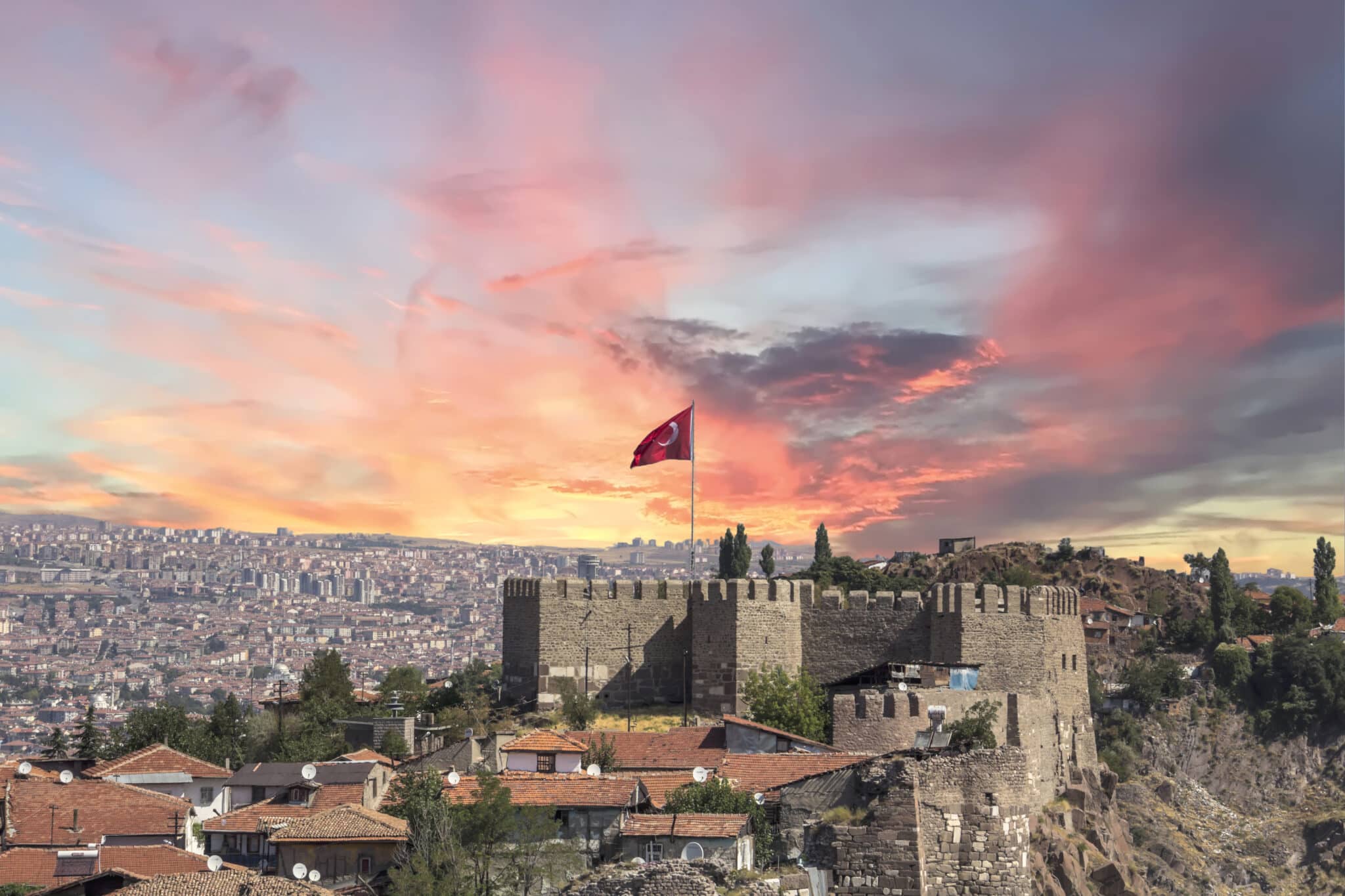
RonalIn September, Turkish Minister of Interior Ali Yerlikaya proposed the creation of TÜRKPOL within the Organization of Turkic States at a meeting of the Organization’s Council of Interior Ministers. As the name suggests, TÜRKPOL would follow “the example of international law enforcement mechanisms, including Interpol” and would “promote the development of cooperation between law enforcement structures of Turkic states.”
The Organization of Turkic States (OTS), formerly called the Turkic Council, was proposed by Kazakh president Nursultan Nazarbayev in 2006, and was founded in 2009. It was formally renamed to the OTS in 2021. Its members are Turkey, Azerbaijan, Kazakhstan, Kyrgyzstan, and Uzbekistan, with Hungary, Turkmenistan, and the Turkish Republic of Northern Cyprus (recognized only by Turkey) as observer states. It has a wide range of subsidiary bodies, including the Parliamentary Assembly of Turkic States.
This proposal for a ‘Turkic INTERPOL’ may sound eccentric. But in recent decades, a number of ‘regional INTERPOLs’ have been created, including – most prominently – the Arab Interior Ministers Council (AIMC), a specialized Ministerial Council of the League of Arab States. Created by the Riyadh Arab Agreement for Judicial Cooperation of 1983, AIMC links its member states for judicial assistance regarding security and criminal matters.
Though it is convenient to describe organizations such as AIMC as ‘regional INTERPOLs’ because of their similarity in function to the worldwide organization of INTERPOL, these similarities should not obscure the fact that AIMC, unlike INTERPOL, has few if any meaningful human rights safeguards on the cooperation it promotes. True, INTERPOL’s safeguards do not always work as intended, but INTERPOL does have real standards that staff inside and observers outside can seek to hold it to. That cannot be said of AIMC.
The existence of organizations like AIMC – and TÜRKPOL, should it actually be established – creates a dilemma. INTERPOL does need further reform. But it is better for international law enforcement cooperation to remain within INTERPOL – flawed though it is – than it is for that cooperation to be driven into ‘regional INTERPOLs’ that lack safeguards and transparency.
Of course, ‘regional INTERPOLs’ will never cover the entire globe. But the Arab League has 22 members. Add in TÜRKPOL and other regional bodies, and there is a possibility – especially if these bodies start to cooperate – that an important part of global police cooperation might leave INTERPOL for organizations that impose no constraints on their member states. These states might do whatever business they are allowed to do through INTERPOL, and funnel whatever INTERPOL rejects as politicized or otherwise unacceptable through their other partnerships.
This would certainly be a concern if TÜRKPOL ever comes into existence. As we noted in a previous blog, “Turkey has compiled a long and egregious track record of abuse in the INTERPOL system.” A TÜRKPOL would surely be wide open for abuse by Turkey, which given its track record has an obvious incentive to propose the creation of a ‘Turkic INTERPOL.’
It is far too soon to assume that TÜRKPOL will actually come into existence. But there is also no inherent reason to believe that it cannot. Both observers and attorneys concerned about abuse committed through INTERPOL should bear in mind that it is not the only organization that exists to promote international law enforcement cooperation, and certainly not the such organization through which abuse can be perpetrated.
www.grossmanyoung.com | info@grossmanyoung.com | (240) 403-0913 | (301) 917-6900
*Disclaimer: This information is presented for the purposes of general education and does not constitute legal advice.
