


Russia Seeks to Legalize Vehicle Thefts Reported Through INTERPOL
Interest in INTERPOL often focuses on its famous Red Notices, and on the ways Red Notices can be abused. But INTERPOL does more than publish Red Notices. It maintains other databases, including its Stolen Motor Vehicle Database (SMV), which holds over 12 million records on cars, trucks, motorbikes, trailers, caravans, buses, and components reported as stolen. In 2023, according to INTERPOL, about 226,000 motor vehicles were identified as stolen.
Not all countries participate reliably in the SMV Database – the U.S., for example, does not. The name of the SMV is also slightly misleading. The fact that a vehicle is included in the SMV does not prove definitively that it was stolen. Nor does inclusion of a vehicle in the SMV represent an official INTERPOL finding: INTERPOL includes vehicles in the SMV at the request of its member states. Vehicles listed in the SMV must simply, under INTERPOL’s rules, be of interest to international police cooperation.
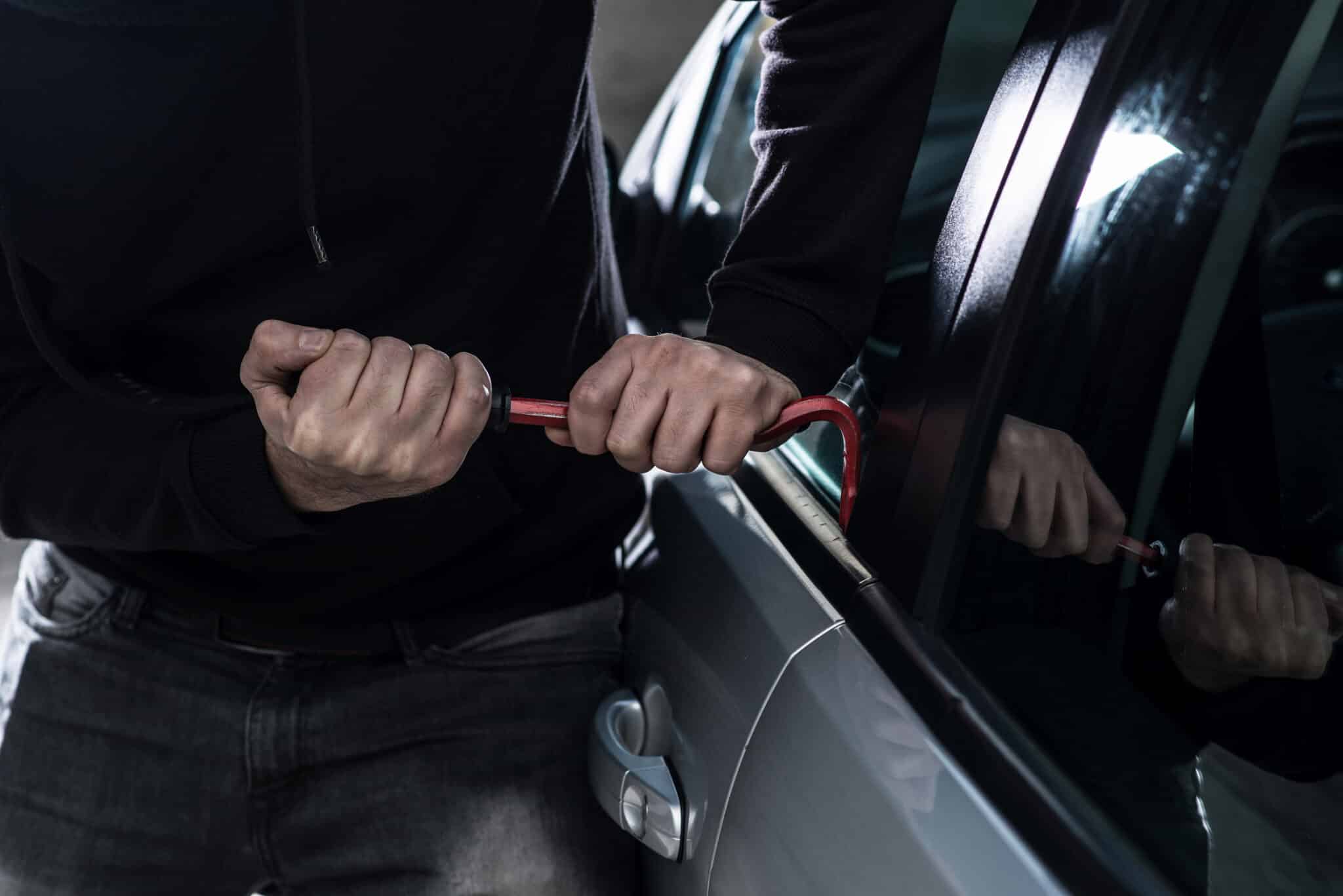
The SMV matters because motor vehicle thefts increasingly move stolen vehicles across international borders. This crime wave has driven in part by demand from Russian buyers for Western vehicles that are no longer available in Russia due to Western sanctions on Russia after its second invasion of Ukraine in 2022. The thefts are not random: potential Russian purchasers name the models they want, organized criminal networks target those vehicles (often popular models like the Ford F-150), steal them in the West, hide them in shipping containers, trans-ship them through a foreign port (often in the Persian Gulf), and finally deliver them to Russia.
The result has been an “epidemic” of car theft in Canada: earlier this year, the New York Times reported that INTERPOL had received “4,798 reports that stolen Canadian vehicles had been found in Russia from February 2024 to July 2026.” According to the Royal Canadian Mounted Police, this massively understates the scale of the thefts – which spiked in 2022. Mysteriously, more than half the stolen cars simply disappeared. The reason eventually became obvious: the cars were being shipped overseas, including to Russia.
In theory, this could be a story about INTERPOL facilitating international police cooperation: those reports from Russia were received only because Russian police use the SMV to investigate possible vehicle thefts. Every hit updates the SMV to report a stolen car found in Russia. And in the past, at least a few of those vehicles have been returned.
While the New York Times quotes unnamed Western officials who assert that “Moscow is broadly cooperative when it comes to crimes like auto theft,” that is too generous: Russia has done nothing to return cars from occupied regions of Ukraine than the Ukrainian authorities have listed in the SMV. But Canadian and other Western authorities are clearly receiving at least some useful information through INTERPOL as a result of Russia’s participation in the SMV.
That looks likely to end. The Russian Supreme Court, considering case of a truck purchased in Bishkek, Kyrgyzstan, in December 2023 and blocked from registration in Russia because it was listed in the SMV has “ordered the registration ban lifted and the truck cleared for use, citing the need to protect Russian citizens who own vehicles wanted at the initiative of ‘unfriendly’ countries.” A State Duma committee has in the last week recommend a bill that would write this provision into Russian law.
The facts of the Russian Supreme Court case are extremely similar to those that the Commission for the Control of INTERPOL’s Files (CCF) – INTERPOL’s independent appellate body – reported in its anonymized decision N°2024-05, in which it found that the vehicle’s inclusion in the SMV complied with INTERPOL’s rules. The suspicion must be that the Russian purchaser of the vehicle listed in the SMV first took his case to the CCF to attempt to have the SMV listing deleted, and after losing that case proceeded through the Russian court system.
INTERPOL has no power to force Russia to return vehicles listed in the SMV that turn up in Russia. It equally has no power to require Russia not to register these vehicles, or even to use the SMV database at all. All INTERPOL members nations are free to use (or not to use) INTERPOL communications and databases as they see fit, provided those uses are compatible with INTERPOL’s rules, and INTERPOL cannot compel any member nation to take any action as a result of any INTERPOL alert. Those principles are well-understood, and INTERPOL would rapidly cease to exist if it tried to violate them.
Nevertheless, this situation stinks. It is true that the vehicles listed in the SMV are not absolutely, definitely stolen. But deciding to register these cars en masse is a complete failure of the principles of international police cooperation on which INTERPOL supposedly rests. It illustrates – not that any illustration is necessary, given Russia’s standing as the iconic abuser of INTERPOL – just how little respect for INTERPOL Russia really has. It shows the serious limits under which INTERPOL operates when it comes to lawless nations like Russia. It demonstrates that the very little there is to be gained from having Russia in INTERPOL will be ruthlessly eliminated as soon as Russia finds it useful to do so.
And then there is the truly perverse reality about the action Russia is proposing. The Russian authorities are essentially arguing that it is Canada that is engaging in transnational repression against innocent Russians by reporting vehicles as stolen through INTERPOL. This is nonsense. The Canadian authorities have no idea where the vehicles they report as stolen will be found: the claim that this is some sort of targeted Canadian attack on Russia is ridiculous.
The fact that so many stolen vehicles end up in Russia obviously reveals the nationality of the buyers, almost all of whom know perfectly well that the new Western cars they want are not legally available in Russia. All the Russian authorities are doing is seeking to legalize thefts – in the Russian system, at least – after the fact. The entire affair demonstrates yet again that Russia is not a fit member of INTERPOL, and that INTERPOL’s system of corrective measures is a very weak reed when it comes to nations like Russia that simply refuse to respect the broader principles of international comity on which INTERPOL is supposedly based.
www.grossmanyoung.com | info@grossmanyoung.com | (240) 403-0913 | (301) 917-6900
*Disclaimer: This information is presented for the purposes of general education and does not constitute legal advice.
